What I Learned From Spiders
I just turned thirty this past weekend, and while I was reflecting on the inscrutability of age, as one tries to avoid on their birthday, I noticed a spider in the upper corner of my room. I watched it wander for a while, it seemed to be going about its daily tasks as I was, and before long, it was gone.
I used to be wary of spiders. How quickly they moved, their pincers, their ability to fit in small spaces, watching, waiting. I used to imagine them laughing at me as I swatted, spun, and spit out webs that I mistakenly walked through, though now I imagine some may have been upset after hours of intricate work was dismantled in a moment. If a spider was in the house, it was communally understood that one way or another, it needed to leave. By shoe, or by sheet of paper slid under a glass, they would be moved on, it was simply the order of things, was it not? Clearly, if so many people felt the way I did about spiders in their home, the threat had to be palpable. At that age, I wasn’t used to questioning things that seemed like social second nature, but the guilt I felt each time I lifted my foot, or readied the paper towel always ate away at me. Yes, as a kid I was wary of spiders, but then again, I was wary of a lot of things I didn’t understand.
It wasn’t long before I ruled out stomping entirely. A few mistimed steps was all it took see the amount of pain I could inflict on something smaller than me, and I abruptly changed tactics. Though still afraid, if a spider was found in the house, I would volunteer to take care of things, removing it at an arms reach, and apologizing quietly as I left it outside. I used to lie awake in my bed thinking about each spider fending for itself in a world that was likely bigger and scarier than my own. But this was the order of things, was it not?
On a trip to the library in third grade, I went to my favorite section and promptly found the A-Z animal books. I had been through a majority of them, but one that I avoided was unsurprisingly the arachnid edition. I pulled out the volume with a shaking hand, and looked upon four pairs of reflective eyes. I carried the book upside down to the check out, as to avoid another staring contest, and stuffed it in my bag at the first opportunity. On the bus ride home, I began looking through the book, often turning the pages with bigger pictures a little bit faster and sticking to the words when possible. At the conclusion of the final page, not only had I been introduced to more spiders than I even knew existed, I had also learned what kind of benefits they offered. Natural pest control, protectors of plants, defenders of a stable ecosystem, doctors in their own right for how they’ve contributed to medication and scientific development. I closed the book and stared at the cover, suddenly aware that the spider looking back at me had just as much control over how it looked as I did, and my prior judgements were tangled up in the things I was too scared to accept or admire. I read it again, this time more slowly, admiring each spider for it’s design, and the miraculous things it was capable of. By the time I got home, I made a promise to myself that if anything made me feel the way spiders used to, I would learn about it to remove the pretense of fear, and better understand the world around me.
I’ll be the first admit that the privilege of growing up in a home where I could spend my nights worrying about the welfare of spiders isn’t lost on me, and I’m under no illusion that they all belong indoors, should they be potentially dangerous, plentiful, or anxiety inducing, but I want to sit with the idea that caring begins with a moment of connection, no matter how brief, and empathy is rooted in the accumulation and processing of both knowledge and experience, often blocked by fear, anger, or lack of information.
Fear is something that exists in spaces we don’t understand, and attempts to keep us from entering them with an open mind. I’ve heard it said that ignorance is bliss, and while I do believe that is half the truth, ignorance often allows fear to masquerade as a fragile form of contentment, one that seeks to stay sedentary and learn as little as possible. Knowledge is a gateway to empathy, to understanding something or someone on a much deeper level, but reliable sources aren’t always available, and truth comes with its own risks. As humans, it is not possible to learn about everything, everywhere, all at once, nor is it expected of us, but with cognition comes a distinct responsibility to seek information out of genuine curiosity, rather than judgement or bias. We are all uniquely suited with the ability to change our mind about anything at any time, which is a far greater strength than some want you to think.
We live in a world where attention and time serve as the most valuable currency, and many people in positions of feigned power have found that a constant helping of anger and fear can drive the profit exponentially higher. For some, empathy is seen as the antithesis of control. A form of resistance so deeply rooted in connection, that it is impossible to fully overcome with hate. Some have spent lifetimes attacking the idea of empathy in an attempt to reign over those they see beneath them, because just like spiders, humans are easier to step on if thought and action are ripped from one another. There’s a reason they say knowledge is power…but true power isn’t loud. It is something quiet, something kind. Maybe, what grants us the most power is working to understand that which we are unfamiliar, thinking for ourselves, and communicating in honest and hopelessly human ways. Overcoming differences for the mutual benefit of those around us is what weak men fear, as too is an individual and collective strength to ask ‘why?’. And while there may be times in all of our lives when empathy is limited, when we are required to turn inward, regardless of reason, I find, in these moments, it is easiest to refill the well slowly and without guilt. Sometimes all it takes is a spider on the window sill, and drop by drop, the capacity for outward thinking is restored.
So here I sit, unsure if the wisdom of age is something that slowly arrives, or is somehow suddenly thrust upon you, but either way, I remain patient. At peace with the spider in my room. Although we remain unaware of one another’s intentions, we benefit mutually from the understanding that harm is not what either of us seek. Once filled with fear, I now take a moment and watch spiders when I see them, even get excited if I come across a familiar face. My space is as much theirs, as theirs is mine, and so I let them be.
If you fear something, my best advice is learn how it works. The world is a wonderful and fascinating place, and true power rests in our ability to understand the people, places, and things around us. To grow. Caring is one of the greatest gifts we have, and to do so with passion, in the depth of life’s absurdity, is something to celebrate, always.
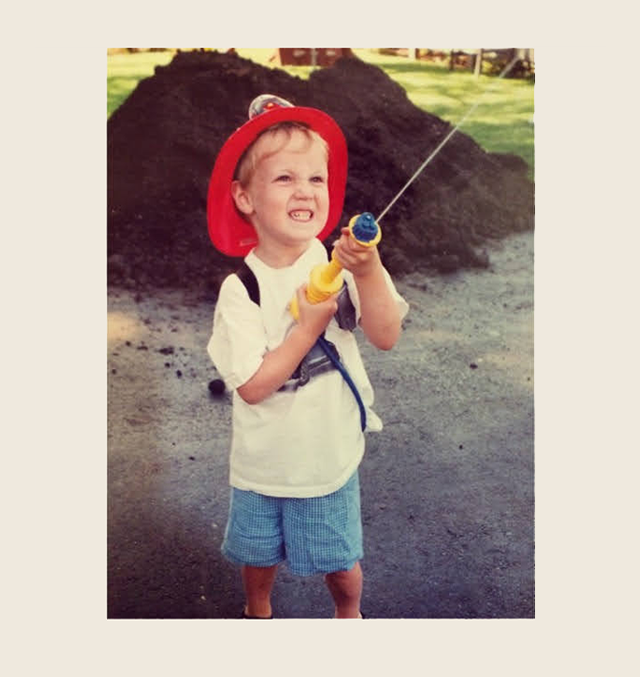
Shoutout to this kid for being brave when it mattered.